

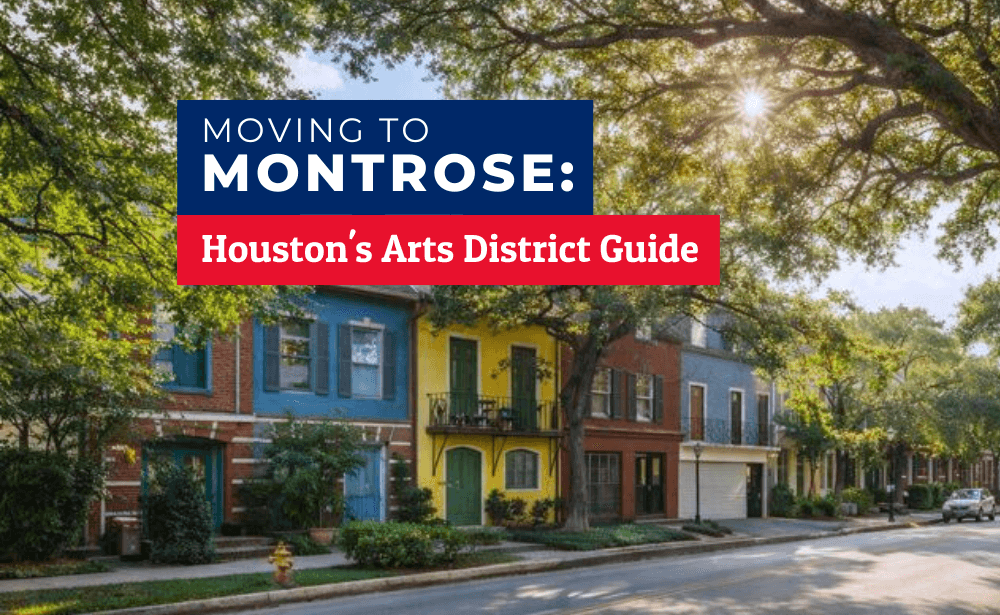
Your Essential Montrose Houston Relocation Guide for a Smooth Move
Introduction to Houston
Houston is one of the fastest-growing major cities in the United States, driven by a strong economy, cultural diversity, and a cost of living that remains more approachable than in other large metros. Often called the Energy Capital of the World, Houston is home to thousands of employers in energy, healthcare, aerospace, and technology, including NASA’s Johnson Space Center.
The city is also known for its sheer size and variety. Houston does not feel like one single place, but rather a collection of neighborhoods with their own identities. From dense urban cores to quiet master-planned suburbs, the range of options attracts professionals, families, creatives, and entrepreneurs alike.
For people relocating from high-cost cities such as San Francisco, New York, or Seattle, Houston’s lack of state income tax and comparatively lower housing costs are major draws. That affordability does not occur at the expense of culture. Houston boasts one of the most diverse populations in the country, reflected in its food, arts, and neighborhoods.
Among those neighborhoods, Montrose stands out as one of the most distinctive and sought-after places to live inside the city loop.
Where Is Montrose Located in Houston?
Montrose’s Role Inside the Houston Metropolitan Area
Montrose sits near the geographic and cultural heart of the Houston metro area, giving residents quick access to Downtown Houston, Midtown, and major business corridors. Its location inside city limits makes it appealing for people who want an urban experience without moving far from necessary services. Compared to outer Houston suburbs, Montrose offers shorter commute times and easier access to cultural attractions. For many new residents, this central positioning makes all the difference when adjusting to a new city.
How Montrose Compares to Houston Suburbs Like Sugar Land
Suburbs such as Sugar Land are known for master-planned communities, newer homes, and family-oriented amenities, such as golf course developments and large school campuses. If Sugar Land's family-oriented setup sounds like a better fit, our Sugar Land movers serve the area and can help you compare the two as you decide. Montrose, by contrast, trades square footage for walkability, character, and convenience. While suburbs like Sugar Land appeal to households seeking modern amenities and quiet streets, Montrose attracts young professionals and creatives who prioritize lifestyle and access. Both options highlight how diverse the Houston area truly is.
A Brief History of the Montrose Neighborhood
Montrose was originally developed in the early 1900s as one of Houston’s first master-planned communities. Its tree-lined streets and early streetcar access made it desirable for professionals as well as families.
Over time, Montrose evolved into a cultural and artistic hub. By the mid-20th century, it became known for its bohemian energy, attracting artists, musicians, activists, and members of Houston’s LGBTQ+ community.
That legacy still shapes Montrose today. While the neighborhood has experienced significant redevelopment and rising home values, it retains a strong sense of uniqueness and creative expression.
What Makes Montrose Unique?
A Neighborhood With Personality
Montrose does not feel cookie-cutter. Historic bungalows sit next to modern townhomes. Murals and sculptures appear where you least expect them. Locally owned cafés, bookstores, and bars remain deeply embedded in daily life.
This mix of old and new gives Montrose a lived-in, authentic character that many newcomers find refreshing.
Walkability and Urban Living
While Houston is famously car-centric, Montrose is one of the city’s more walkable neighborhoods. Many residents walk or bike to restaurants, coffee shops, and bars, especially near Westheimer and Montrose Boulevard.
Bike lanes and proximity to nearby green spaces add to its appeal for people who want urban living without feeling boxed in.
Housing Options in Montrose
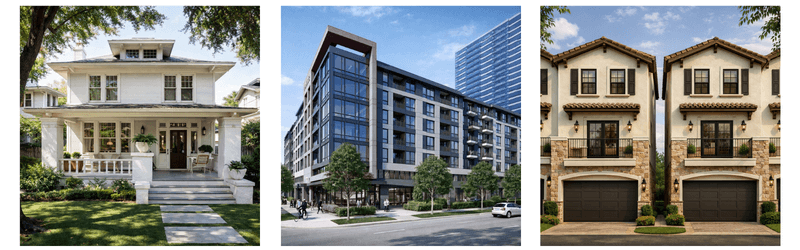
Single-Family Homes and Bungalows
Montrose is known for its historic homes, many built between the 1910s and 1940s. These properties commonly feature large porches, original hardwood floors, and mature trees.
Renovated bungalows are especially popular, though prices reflect demand and central location.
Townhomes and New Construction
Townhomes are common throughout Montrose and are highly sought after as a lower-maintenance option close to the city center. Many newer developments include rooftop terraces, garages, and modern finishes.
These homes appeal to professionals who want space without suburban sprawl.
Apartments and Condos
Montrose offers a wide range of apartment styles, from smaller vintage buildings to modern mid-rise complexes. Rent varies considerably based on vicinity to major corridors and amenities.
Condos are also available, particularly near Westheimer and the Museum District border.
Affordable Housing and Affordable Living Options
Affordable Housing Across the Houston Area
Affordable housing exists throughout the Houston metro area, though availability varies widely by neighborhood. Programs include income-restricted apartments, mixed-use developments, and workforce housing initiatives. While Montrose has fewer affordable units than outer districts, nearby areas provide options without sacrificing access. Affordable living in Houston often depends on flexibility and timing.
Balancing Houston Cost With Lifestyle
The Houston cost of living remains one of the city’s strongest draws. With no state income tax, residents often retain more take-home pay compared to peers in other metropolitan areas. Housing, utilities, and transportation costs still require planning, but Houston offers greater flexibility than many cities. This balance supports both long-term residents and newcomers alike.
Renting vs Buying in Montrose
Renting in Montrose
Renters benefit from flexibility and access to central Houston without the long-term commitment of ownership. One-bedroom apartments typically cost more than suburban options but offer location advantages.
Many newcomers rent first to learn flood patterns, traffic flows, and street-by-street differences before buying.
Buying in Montrose
Buying in Montrose is often viewed as a long-term investment. Home values have historically trended upward due to limited supply, location, and demand.
Buyers should work with agents familiar with Montrose zoning, deed restrictions, and lot sizes, which can vary widely.
Housing Market Micro-Insights for Montrose and Beyond
Median Home Price vs Nationwide Average
Houston’s median home price remains below the nationwide average, even in popular central neighborhoods. Montrose sits higher than many Houston suburbs, but it still compares favorably to similar neighborhoods in other major metro areas. Buyers relocating from coastal cities often find Houston’s housing market refreshingly accessible. Knowing these comparisons helps buyers assess long-term value.
Apartment Complexes and Average Rent Expectations
Apartment complexes in Montrose range from vintage walk-ups to modern mid-rise buildings. The average rent for a one-bedroom apartment varies by street, amenities, and proximity to nightlife. While Montrose rents are higher than those in outer areas, they remain competitive compared to similar urban districts nationwide. Many renters accept a smaller footprint in exchange for location and lifestyle.
Flood Risk and Environmental Considerations
Understanding Flood Zones
Flood risk is an important consideration anywhere in Houston. Montrose generally fares better than many low-lying areas, but flood risk varies by street and drainage patterns.
Buyers and renters should review FEMA flood maps and ask about a property's prior flooding history.
Bayou City Weather and Heavy Rain Events
Houston is often called the Bayou City for a reason. Heavy rain events can occur quickly, especially during hurricane season. Understanding average annual rainfall and local drainage patterns helps residents prepare responsibly. Montrose generally performs better than lower-lying areas, but no Houston neighborhood is entirely immune.
Flood Insurance
Even homes outside high-risk zones may benefit from flood insurance. Policies are usually more affordable when purchased proactively rather than after storms.
Air Conditioning and Weather Preparedness
Air conditioning is not a luxury in Houston, it is a necessity. Summers are hot and humid, and reliable cooling plays a major role in daily comfort. New residents quickly learn to factor energy efficiency and insulation into housing decisions. Weather preparedness is simply part of life in the Lone Star State.
Crime and Safety in Montrose
Montrose is considered moderately safe compared to other central Houston neighborhoods. Crime tends to be property-related rather than violent, especially near nightlife corridors.
Many residents prioritize secure parking, well-lit streets, and alarm systems. Neighborhood associations and civic engagement contribute to safety awareness.
Crime rates can vary block by block, making local insight especially valuable. For a broader picture of how Montrose compares to Houston's safest residential areas, see our guide to the safest neighborhoods in Houston for families.
Schools and Education Near Montrose
Public Schools
Montrose is served by Houston ISD, with zoning determined by location. Schools such as Poe Elementary and Lanier Middle School are commonly associated with the area.
Families should verify zoning carefully, as boundaries change. For neighborhood-by-neighborhood school and safety comparisons, our guide to the best Houston neighborhoods for families covers the most sought-after areas side by side.
Private and Charter Schools
Montrose is close to several private and charter schools, offering additional educational options. Many families choose these due to proximity and specialized programs.
Higher Education Access
Montrose’s central location provides quick access to universities such as Rice University and University of Houston.
Commuting From Montrose
Driving Times
Montrose residents enjoy relatively short commutes to Downtown Houston, Midtown, and the Texas Medical Center, often under 15–20 minutes without heavy traffic.
Uptown and the Galleria area are also easily accessible.
Public Transportation
METRORail and bus routes serve nearby areas, particularly toward Downtown and Midtown. While most residents still rely on cars, public transit is more viable here than in many Houston neighborhoods.
Biking and Walking
Bicycle lanes and trails connect Montrose to Buffalo Bayou Park and surrounding areas, making cycling a practical option for some commutes.
Transportation Costs and Commute Realities
Transportation costs vary widely depending on where you live and work. Montrose residents enjoy shorter drives to Downtown Houston and nearby job centers. Compared to outer Houston suburbs, fuel and time costs may be lower despite higher housing prices. These daily savings add up over time.
Employment and Job Access
Jobs, Economy, and Opportunity
Montrose’s location places residents near major employment hubs, including Downtown, the Medical Center, Greenway Plaza, and Uptown. Industries commonly represented include healthcare, energy, marketing, design, nonprofit work, and entrepreneurship. Remote workers also favor Montrose for its café culture and central access.
A Booming Job Market Across Industries
Houston’s booming job market spans energy, healthcare, aerospace, logistics, and technology. Major corporations maintain headquarters or regional offices throughout the Houston area. This economic diversity helps insulate the city from downturns tied to a single industry. Job seekers often find opportunities faster here than in many metros.
Space City Identity and Career Access
Known globally as Space City, Houston’s connection to aerospace and innovation runs deep. Professionals working in science, engineering, and medical services benefit from proximity to world-class institutions. Montrose’s central location provides convenient access to these employment hubs without long commutes.
Entertainment and Nightlife in Montrose
Cultural Diversity in Everyday Life
Cultural diversity is woven into daily life in Houston. Diverse neighborhoods bring global cuisine, languages, and traditions into everyday routines. This diversity helps form a welcoming environment for newcomers. For many, Houston offers a cultural richness that rivals far more expensive cities.
Art Galleries, Museums, and Cultural Attractions
Montrose is surrounded by art galleries and cultural attractions that reflect Houston’s creative energy. Museums, live music venues, and performance spaces are easily accessible. Many residents enjoy free entertainment through public events, gallery openings, and festivals like the Houston Livestock Show, one of the city’s most iconic traditions.
Dining Scene
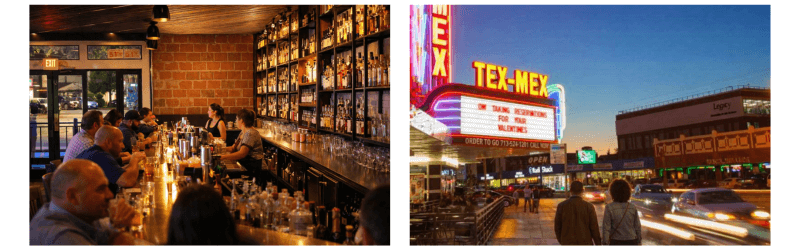
Montrose is one of Houston’s most food-forward neighborhoods. Restaurants range from casual taco spots to chef-driven concepts. Known for its diverse cuisines, you can’t go wrong if you’re looking for a delicious lunch or a swanky date dinner. The endless options reflect Houston’s multicultural population, offering nearly every dietary preference.
Bars and Music Venues
Westheimer Road is a nightlife anchor, offering cocktail lounges, dive bars, and live music venues. Montrose nightlife skews eclectic rather than flashy. You will spot visitors and locals alike, enjoying cold drinks and good music. With many well-known artists calling Houston home, you never know who you may see performing on any given Friday night.
Arts and Culture
Montrose sits near the Museum District and is home to independent galleries, theaters, and performance spaces, including the locally beloved Contemporary Arts Museum Houston, just minutes away. It was founded in 1948 by local artists and patrons to promote contemporary visual art. The best part? Admission is free!
Healthcare and Wellness Access
Proximity to Healthcare Facilities
Montrose is located close to the Texas Medical Center, the largest medical complex in the world. Residents have easy access to hospitals, specialty clinics, wellness centers, and fitness studios within minutes of home. Access to care is a major advantage for families and professionals alike. This desirable proximity influences many residents’ decisions when choosing a new neighborhood.
Wellness as Part of Daily Living
Beyond hospitals, Houston offers wellness options ranging from fitness studios to outdoor recreation. Parks, trails, and community classes support healthier routines. For many Montrose residents, this mixture of convenient access to both medical and lifestyle attractions is a big draw and improves their quality of life.
Community and Lifestyle
Neighborhood Associations
Active civic clubs and neighborhood groups help preserve Montrose’s character while advocating for infrastructure improvements. These organizations often focus on walkability, historic preservation, and thoughtful development, giving residents a voice as the neighborhood continues evolving. For many people, this sense of local involvement makes Montrose feel more connected and intentional than other parts of the city.
Diversity and Inclusion
Montrose has long been associated with inclusivity and acceptance, solidifying its reputation as one of Houston’s most open and welcoming neighborhoods. Its LGBTQ+ history remains an important part of its identity, shaping everything from local businesses to community events. That legacy plays a part in a neighborhood culture where differences are visible, respected, and woven into everyday life.
Buffalo Bayou Park
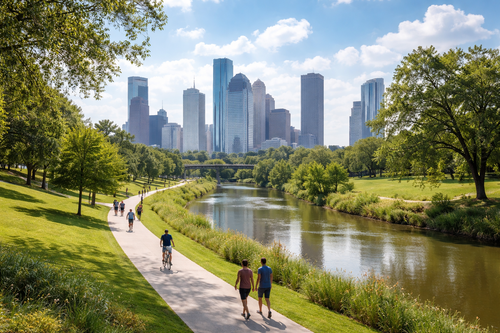
Buffalo Bayou Park provides miles of trails, skyline views, and green space just north of Montrose, making it easy to escape into nature without leaving the city. It is a major recreational asset for runners, cyclists, and families, as well as a popular spot for picnics and weekend gatherings. Easy access to the park adds balance to Montrose’s urban energy.
Neighborhood Green Spaces
Smaller parks and pocket green spaces are scattered throughout Montrose, offering places to relax without leaving the neighborhood. These peaceful spots are often used for casual walks, dog outings, or a moment of calm between errands. They contribute to Montrose’s livability by breaking up the density with pockets of shade and greenery.
Why Montrose Remains One of the Best Neighborhoods
A Welcoming Environment for New Residents
Montrose has long attracted people relocating to Houston who want connection and character. Its diverse culture, active street life, and independent businesses create an approachable atmosphere. New residents integrate quickly through local cafés, events, and community groups. This social ease can make all the difference after a major move.
Montrose as a Houston Home Base
Choosing Montrose as your Houston home means prioritizing location, history, and individuality. While it may not suit every budget or lifestyle, those who settle here often stay. In a city without traditional zoning laws, Montrose keeps a balance of creativity and livability. For many, it represents Houston at its most authentic.
Future Development and Growth
Montrose continues to evolve through redevelopment, infrastructure upgrades, and new mixed-use projects. City planning efforts aim to balance density with historic preservation, a topic closely followed by residents.
Cost of Living in Montrose
Montrose is more expensive than many Houston neighborhoods, particularly suburban areas, but it remains affordable compared to similar central districts in other major Texas cities, such as Dallas. Residents of Montrose gladly trade square footage for location and lifestyle benefits.
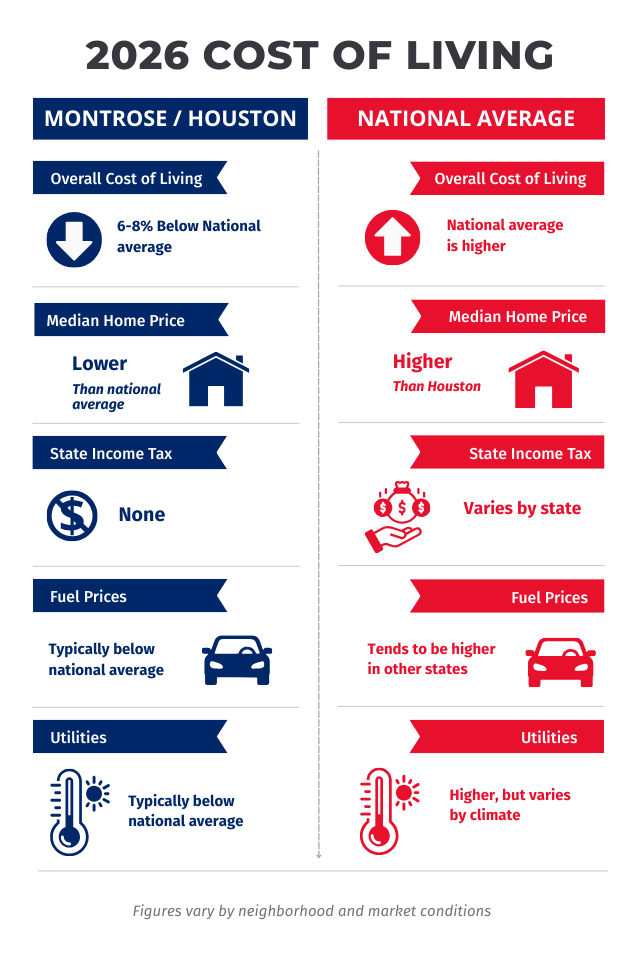
Houston is often cited as one of the more affordable large cities in the United States, especially when compared to other major metropolitan areas. While the cost of living varies by neighborhood, Houston’s overall cost remains below the national average, particularly in housing and taxes.
A Quick Cost of Living Snapshot:
- Houston's overall cost of living: ~6–8% below the national average
- Houston metro area median home price: Lower than the nationwide average
- Montrose housing costs: Higher than the Houston average, lower than comparable urban neighborhoods nationally
- Average one-bedroom apartment (Houston): Generally below national big-city averages
- State income tax: None
- Transportation costs: Moderate, varies by commute
- Utilities: Higher in summer due to air conditioning
- Entertainment: Many free or low-cost options available year-round
Tips for Moving to Montrose
Plan for Tight Streets
Some Montrose streets are narrow, with limited parking, low-hanging trees, and older infrastructure that can complicate move day. Planning ahead matters, especially for larger trucks, townhome moves, or homes with shared driveways. Simple steps like reserving curb space, coordinating elevator access when applicable, and understanding alley layouts can prevent delays. Our guide on packing services covers what a professional crew handles on move day, which can make a real difference in tight-access properties. This is where guidance from professionals familiar with Montrose’s block-by-block differences can make a noticeable difference.
Choose Local Movers
Working with movers who understand central Houston neighborhoods helps reduce the risk of delays, damage, and last-minute surprises. Montrose requires a different approach than suburban moves, from navigating tight turns to protecting historic floors and doorways. Movers with experience in areas like Montrose, Midtown, and Downtown Houston often bring the right equipment, crew size, and pacing for these conditions.
Many residents find value in resources offered by established Houston-based moving companies, including pre-move checklists, packing tips, and neighborhood-specific guidance. 3 Men Movers provide all the tools to help turn what could be a stressful move into a more controlled, efficient process.
Helpful Resources for New Residents
Ask any Houstonian, and they’ll tell you there are a few things you’ll want to get sorted pretty quickly after you move. From utilities and school zoning to transportation and flood info, these are the basics people usually end up hunting for sooner or later. We’ve pulled together a quick list of reliable resources, so you don’t have to chase them down yourself as you get settled in Montrose.
Essentials:
- City of Houston utilities and services
- Houston ISD zoning maps
- METRO public transportation routes and system maps
- FEMA flood map service
- City of Houston recycling and trash schedules
BONUS - Nice to local things know:
- Best restaurants and bars in Montrose
Houstonia regularly updates Montrose-focused food guides, and they’re well-known locally: - Things to do in Montrose and nearby neighborhoods
CultureMap Houston does a great job covering events, openings, and neighborhood highlights:
Researching Houston Neighborhoods Before Moving
Why Research Neighborhoods Matters More in Houston
Because Houston is Texas’s largest city by population and land area, researching neighborhoods is essential. Conditions can change dramatically within just a few blocks, affecting safety statistics, property values, and commute times. Doing this research before relocating to Houston helps avoid costly surprises and supports a more stress free transition. Local insight and in depth knowledge often reveal details that online listings miss.
Temporary Housing as a Smart First Step
Many people moving to Houston choose temporary housing during their first few months. Short-term leases or furnished apartment complexes allow newcomers to explore the city before committing. This approach is especially helpful for understanding traffic patterns, transportation costs, and how different neighborhoods feel day to day. Temporary housing can make a significant life change feel easier to manage.
Final Thoughts on Relocating to Montrose
If you ask people who live here why they chose Montrose, you’ll hear a lot of the same themes come up. It’s central without feeling chaotic, full of culture without trying too hard, and packed with personality that hasn’t been sanded down over time. You’re close to the best of Houston, but still very much in a neighborhood.
Montrose isn’t the right fit for everyone. Housing costs can be higher than other parts of the city, and density is part of the deal. But for the people who land here, it often becomes a long-term choice rather than a temporary stop.
For anyone relocating to Houston and looking for an area that feels established, expressive, and genuinely connected to the city around it, Montrose continues to stand out as one of Houston’s most compelling neighborhoods to call home. If you're still weighing Montrose against other inner-loop options, our Houston Heights neighborhood guide profiles another popular choice just north of downtown.